
Buying a property is one of the biggest financial decisions you may ever make. Whether you are purchasing a new apartment, a resale flat, an independent house, or a plot of land, the excitement of finding the right property can sometimes make buyers overlook an equally important step: property document verification.
A beautiful property in a great location does not automatically mean it is a safe investment. Before paying a token amount, signing an agreement, or completing the property registration process, buyers should verify the property's legal ownership, approvals, financial liabilities, construction permissions, and regulatory compliance.
So, what documents should a property buyer check before purchasing a home?
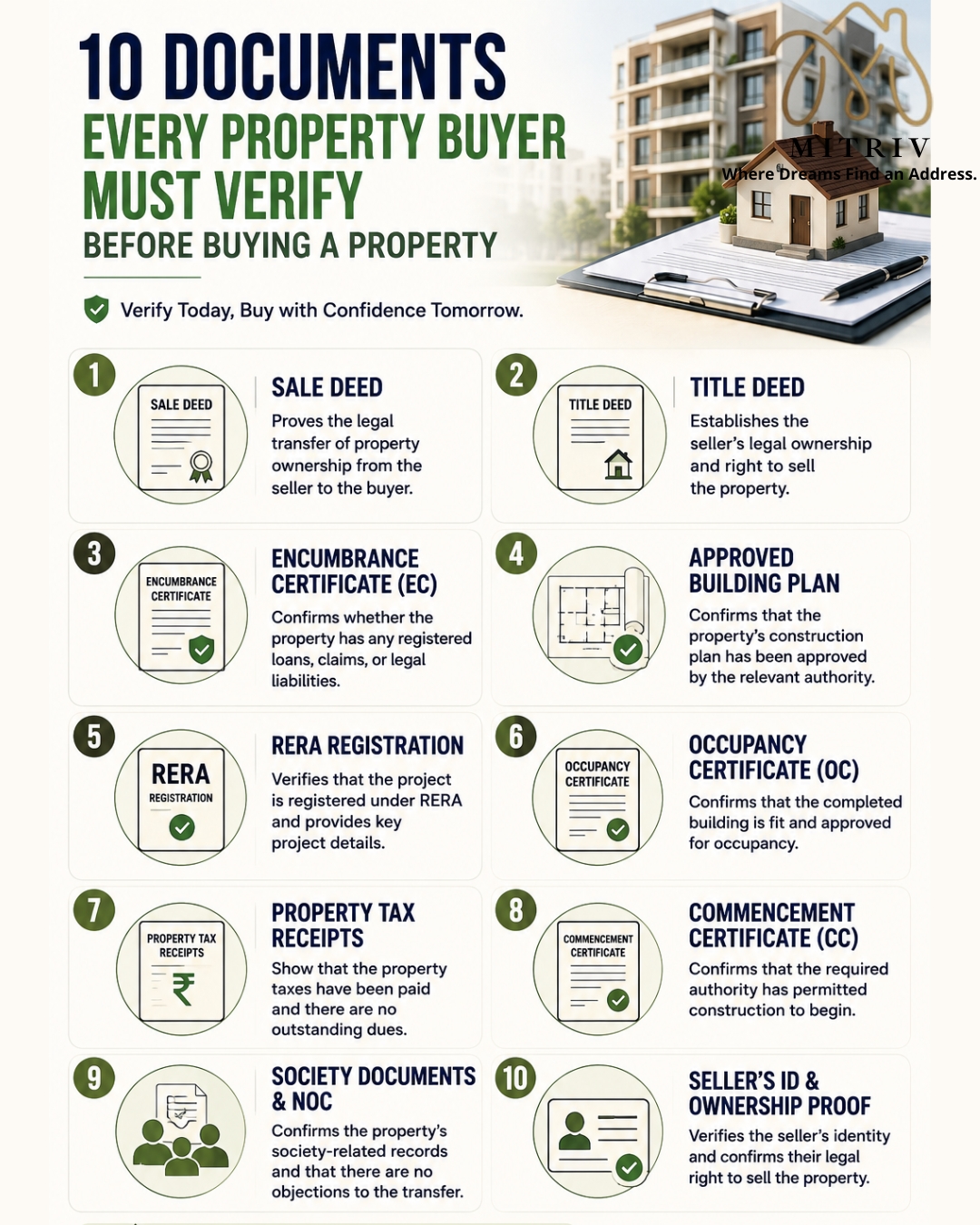
Here are 10 essential property documents every buyer should verify before making a real estate investment.
1. Sale Deed
The Sale Deed is one of the most important legal documents in a property transaction. It records the transfer of ownership of the property from the seller to the buyer.
Before purchasing a property, verify that the Sale Deed:
- Clearly identifies the buyer and seller
- Contains an accurate description of the property
- Mentions the agreed sale consideration
- Includes the property's boundaries and other relevant details
- Is properly executed and registered
- Matches the seller's ownership information
For a resale property, buyers should also examine the previous sale deeds to understand the property's ownership history.
Why it matters: A properly executed and registered Sale Deed provides important evidence of the transfer of ownership.
2. Title Deed
The Title Deed establishes the seller's legal ownership or title over the property. It is essential to determine whether the person selling the property actually has the legal right to sell it.
A buyer should examine the title chain and verify whether ownership has been transferred properly through previous transactions.
Look for:
- Clear ownership history
- Previous registered documents
- Consistency in property details
- Any gaps or inconsistencies in the title chain
- Claims or disputes relating to ownership
For complex properties, it is advisable to have a qualified property lawyer conduct a detailed title search.
Why it matters: A clear title can help reduce the risk of future ownership disputes.
3. Encumbrance Certificate
An Encumbrance Certificate (EC) provides information about registered transactions and certain encumbrances affecting a property for a specified period, depending on the records and jurisdiction.
The EC can help a buyer identify whether there are registered transactions such as mortgages or other registered claims reflected in the relevant records.
However, an EC should not be treated as a complete guarantee that a property has no possible legal issues. Buyers should conduct broader legal due diligence as well.
When reviewing an EC, check:
- Property identification details
- The period covered
- Registered transactions
- Mortgage or charge-related entries, where reflected
- Whether the document corresponds with the property being purchased
Why it matters: The EC is an important part of checking the property's registered transaction history and potential encumbrances.
4. Approved Building Plan
Before buying an apartment, house, or other constructed property, verify that the building plan has been approved by the competent local authority.
The approved plan typically provides information about the sanctioned development, including aspects such as:
- Building layout
- Number of floors
- Permitted construction
- Floor plans
- Setbacks and other planning requirements
- Approved development specifications
For under-construction properties, compare the project's marketing material with the sanctioned plans and official project disclosures wherever possible.
Why it matters: Unapproved or unauthorised construction can create serious legal, financial, and resale problems.
5. RERA Registration
If the project falls within the scope of the Real Estate (Regulation and Development) Act, 2016, buyers should verify its registration with the relevant State or Union Territory RERA authority.
RERA registration can provide buyers with access to important project information, including details relating to the promoter, project, declared timelines, and other disclosures required under the applicable regulatory framework.
Before buying, check:
- RERA registration number
- Promoter details
- Project status
- Declared completion timeline
- Project disclosures
- Registered plans and other available information
Why it matters: RERA provides an important transparency and regulatory framework for covered real estate projects and helps buyers make more informed decisions.
6. Occupancy Certificate
The Occupancy Certificate (OC) is an important document for completed buildings. It is generally issued by the competent authority after the development is completed in accordance with applicable requirements.
Depending on local regulations, the OC indicates that the building is fit for occupation and complies with relevant approved plans and requirements.
For a ready-to-move-in property, buyers should ask:
"Has the Occupancy Certificate been issued?"
If the answer is yes, verify the document and ensure that it relates to the relevant building or phase.
Why it matters: Taking possession of a property without checking applicable completion and occupancy approvals can expose buyers to unnecessary risks.
7. Property Tax Receipts
Property tax records and receipts are another important part of property due diligence.
Before purchasing a resale property, check whether applicable property taxes have been paid and whether there are outstanding dues.
Verify:
- Property identification details
- Owner details
- Tax period
- Payment status
- Outstanding dues, if any
- Consistency with the property being purchased
The exact procedure and records available can vary between municipal and local authorities.
Why it matters: Outstanding property tax liabilities can create complications during a property transaction and should be identified before closing the deal.
8. Commencement Certificate
The Commencement Certificate (CC) is an important approval for construction projects. It is generally issued by the competent authority permitting construction to commence in accordance with applicable approvals.
For an under-construction property, buyers should verify the project's commencement approvals and ensure that the construction corresponds with the permissions granted.
Check:
- Whether the certificate has been issued
- The project or building to which it applies
- The approved construction scope
- Whether construction appears consistent with the sanctioned permissions
Why it matters: A commencement approval is an important indicator that construction has been authorised by the relevant authority.
9. Society Documents & NOC
For a property located within a housing society or apartment association, buyers should also review relevant society documents and No Objection Certificates (NOCs) where applicable.
Depending on the transaction and local requirements, these may include:
- Society or association registration
- Share certificate
- Maintenance dues
- Transfer requirements
- Society NOC
- Parking allocation
- Pending disputes or notices
- Other society-related obligations
For resale properties, it is particularly important to confirm whether the seller has cleared outstanding society or maintenance dues.
Why it matters: Society-level issues can affect the transfer of the property and may result in unexpected financial or administrative complications.
10. Seller's ID & Ownership Proof
Finally, verify the seller's identity and ownership documents.
The person selling the property should be properly identified, and their identity should correspond with the ownership records and transaction documents.
Pay particular attention when:
- There are multiple owners
- The property is jointly owned
- The seller is acting through a Power of Attorney
- The seller is a legal heir
- The property is being sold by an entity or organisation
- There has been a recent transfer of ownership
Why it matters: Confirming the seller's identity and legal authority to sell helps reduce the risk of fraudulent or unauthorised transactions.
Why Property Document Verification Matters
Property document verification is not simply a formality. It is one of the most important steps in real estate due diligence.
A buyer may spend years paying a home loan, but a title dispute, unauthorised construction, unpaid dues, or missing approval can create significant problems long after the purchase.
Proper verification can help you identify potential issues related to:
- Property ownership
- Title defects
- Existing encumbrances
- Construction approvals
- Regulatory compliance
- Tax liabilities
- Society dues
- Seller identity
- Possession and occupancy
- Project registration
The objective is not to make the property-buying process complicated. It is to make the purchase informed and legally safer.
New Property vs Resale Property: What Should You Check?
The documents you need may vary depending on the type of property.
For a New Property
- RERA registration
- Approved building plans
- Commencement Certificate
- Promoter details
- Project approvals
- Construction status
- Agreement for Sale
- Occupancy Certificate, where the project is completed
For a Resale Property
- Previous Sale Deeds
- Title chain
- Encumbrance Certificate
- Property tax receipts
- Society share certificate
- Society NOC
- Maintenance dues
- Seller's ownership proof
- Existing loan or mortgage status
- Possession-related documents
The exact documents required can vary depending on the property, state, local authority, transaction structure, and whether the property is residential, commercial, or land.
Common Mistakes Buyers Should Avoid
Relying Only on the Broker
A broker can provide useful information, but buyers should independently verify important legal and regulatory documents.
Checking Documents Only After Paying a Token
Ideally, conduct preliminary due diligence before making significant financial commitments.
Ignoring Previous Ownership Records
For resale properties, don't examine only the current Sale Deed. Review the relevant ownership chain.
Assuming RERA Means Everything Is Verified
RERA registration is an important regulatory check, but it does not replace comprehensive legal, financial, and technical due diligence.
Not Checking Outstanding Dues
Property tax, maintenance charges, loans, and other liabilities should be investigated before completing the transaction.
Not Getting Professional Legal Advice
Property laws and documentation requirements can be complex. A qualified property lawyer can help identify title and documentation issues that may not be obvious to a first-time buyer.
Property Document Verification Checklist
Before purchasing a property, use this quick checklist:
- Sale Deed
- Title Deed and ownership chain
- Encumbrance Certificate
- Approved Building Plan
- RERA Registration
- Occupancy Certificate, where applicable
- Property Tax Receipts
- Commencement Certificate, where applicable
- Society Documents & NOC, where applicable
- Seller's ID & Ownership Proof
Remember: the exact documents required depend on the property and jurisdiction. Always verify the applicable requirements with the relevant authorities and qualified professionals.
Final Thoughts
Buying a property should be exciting—not stressful because of a document you forgot to verify.
From the Sale Deed and Title Deed to the Encumbrance Certificate, RERA registration, approved building plan, Occupancy Certificate, tax receipts, and seller's ownership proof, every document plays a different role in establishing the property's legal and regulatory position.
A few hours of careful verification before buying can help you avoid years of unnecessary complications.
Don't just fall in love with the property. Fall in love with the paperwork too.
Want More Property Buying Tips?
If you're planning to buy a home or invest in real estate, we've also created an Instagram video covering these 10 essential property documents in a simple and easy-to-understand format.
🎥 Watch our Instagram video to quickly understand what documents you should verify before buying a property.
👉 Check out the video on Instagram and share it with someone planning to buy a home!
Follow us for more real estate insights, property-buying tips, RERA updates, market knowledge, and practical guidance to help you make smarter property decisions.